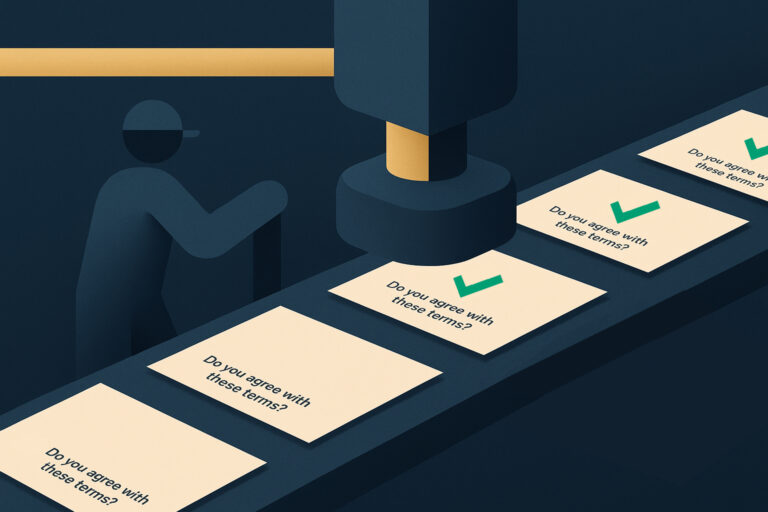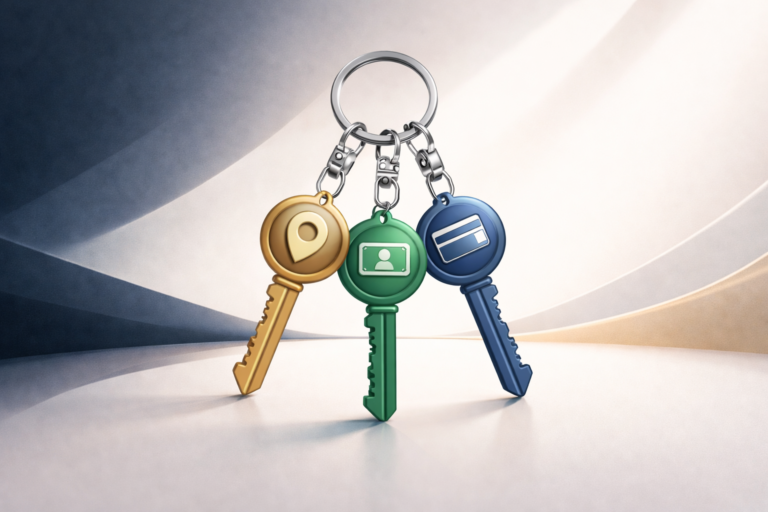

How many times have you heard the phrase “You’re the product?” Probably thousands. It gets tossed around like a natural law of the internet that’s accepted, repeated, and rarely questioned. It’s a lie. It’s a convenient lie a company tells to take something from you that you didn’t know you created. It’s a profitable lie that allows the process to be repeated without people knowing about it. It’s a manipulative lie that helps you rationalize why a company mistreated you.
The phrase frames you as a passive object, something to be possessed. But you’re not the product. You’re the owner of valuable property that’s being taken from you without your knowledge, without your consent, and without a dime of compensation.
Every time you search, shop, drive, or browse, you generate valuable data. That data is your property, and an entire industry is built on selling it out from under you. I know you’re skeptical of the actual value, so let’s get specific about how your data is captured, priced, and sold every week. To do that, let’s follow Becky through a normal week.
Becky’s transactions tell a story
Every purchase Becky makes creates a data point. Becky sees coffee runs, taxi rides, grocery store trips, and clothing purchases, while the market sees something else entirely.
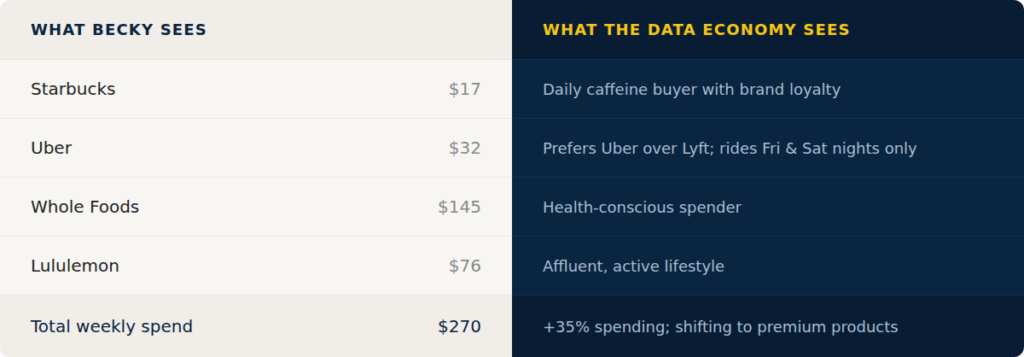
A week of ordinary spending reveals Becky’s habits, brand loyalty, income bracket, and that she’s spending more on higher-end products.
Becky’s data is combined with millions of other people, and it reveals where the entire economy is heading in real-time.
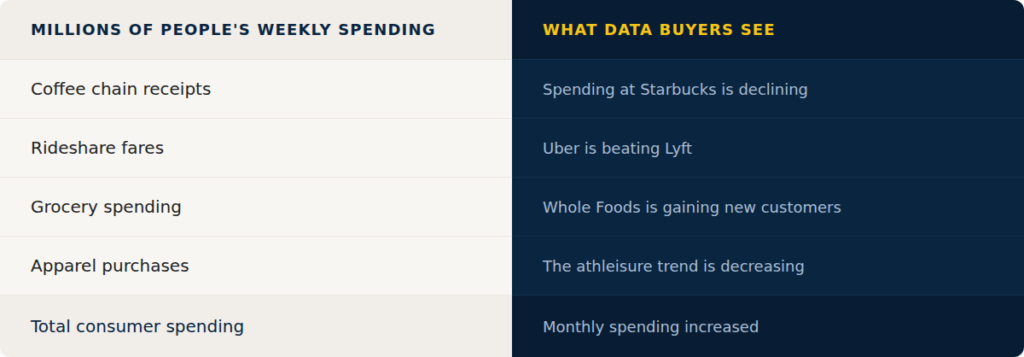
Brands and investment firms pay handsomely for these signals because they can see the economy moving before official reports are published. In fact, the dataset is so powerful that stock traders use it to know how a company is performing before the company even reports its own results.
Becky’s searches reveal what she’s thinking
Becky’s search history is a direct window into her mind, and any app with a search bar for her to type is capturing the insight. Think about the things she might type into apps without a second thought.
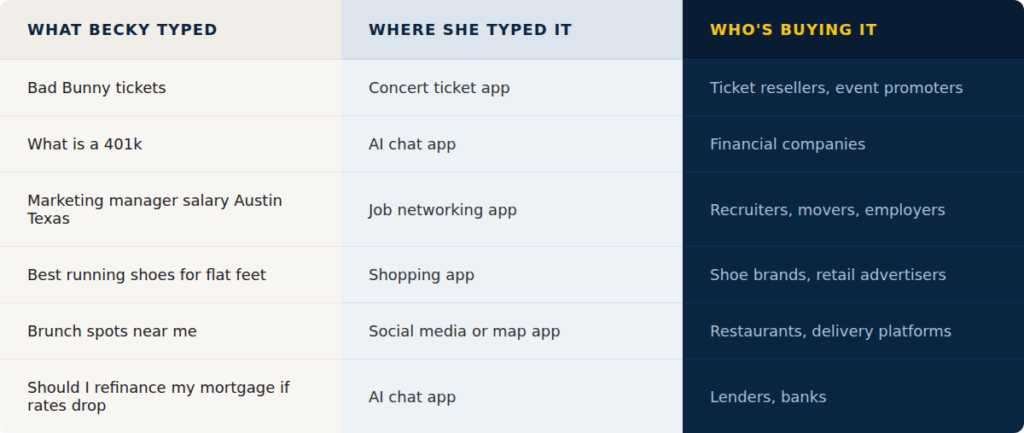
Six different apps that see six ordinary moments in Becky’s week. None of them felt like she was giving something valuable away, but each one is a piece of her identity puzzle that, when assembled, becomes a portrait of who she is. One week of data told the market she’s a young professional who hasn’t started investing, is considering a career change and a move to Texas, has a foot condition, is about to spend money on concert tickets, and might be ready to refinance a home.
Becky’s location reveals where she goes
Becky’s phone and the apps she uses track her movements constantly. During COVID, her location data, along with millions of others’, was used to track real-time migration patterns. The market could see which cities people were leaving and where they were going months before official reports caught up. The usefulness of Becky’s location data increased since then and is desired by many different types of data buyers, such as retailers measuring foot traffic, political campaigns targeting voters, and real estate investors pricing neighborhoods. It is one of the most desired single pieces of data that she creates.
Who’s profiting and how much
Each of these data types is valuable on its own, but together they form something far more valuable. For example, one highly desired combination is search, location, and transaction data. When combined, buyers can map Becky’s complete path to purchase among other things.
Middlemen called data brokers are capturing these small pieces from Becky’s apps, combining them into an imposter version of her, and selling it like hotcakes. Here’s how the process works:
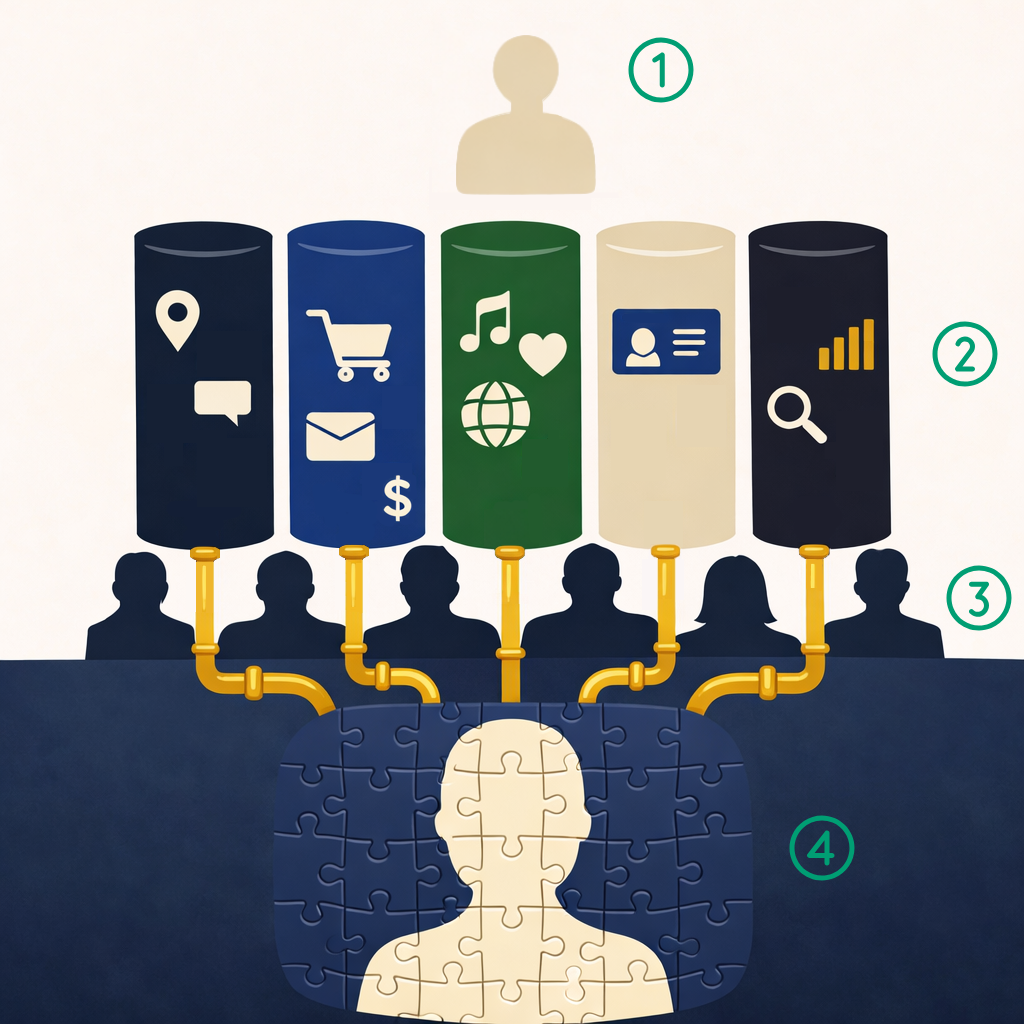
Becky (1) starts the process by using apps on her phone. (2)The apps gather the data Becky creates and sell it to data brokers. (3) The data brokers combine Becky’s data from multiple apps and create a counterfeit identity puzzle of her real identity. (4) Becky’s sham identity puzzle is then lumped and dumped into things called data lakes, alongside millions of others.
Becky isn’t alone. This is happening to all of us. The data in the data lakes are marketed just like corporate software subscriptions. You can see it for yourself in the marketplace.
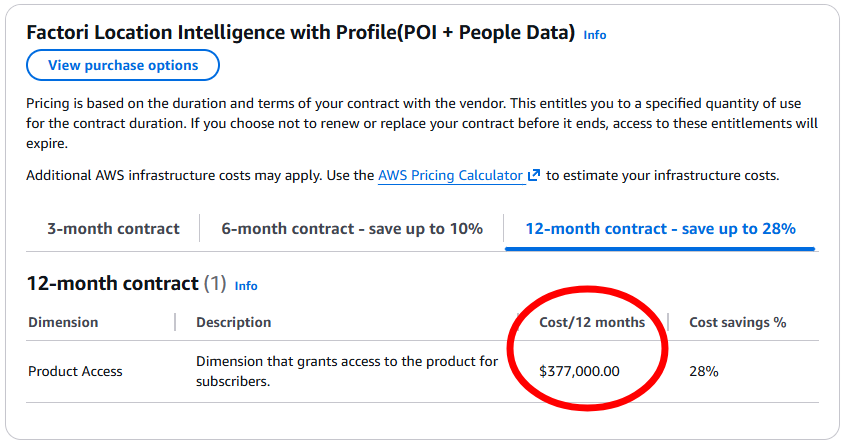
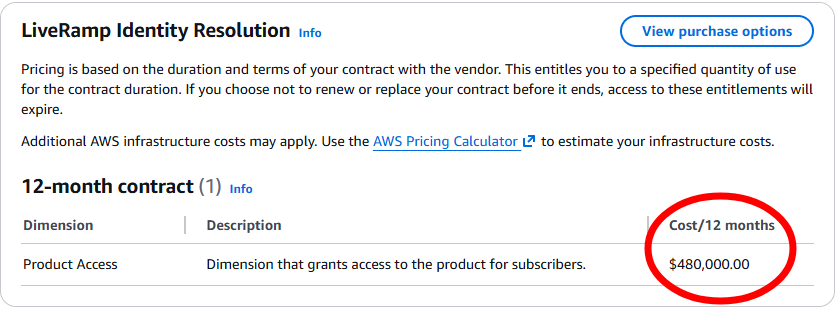
Nearly half a million dollars for one subscription, from one company, for a fraction of the data you and Becky create. And these are the cheap data brokers! Imagine how much more money there is and ask yourself ‘why aren’t I being paid for this?’
A business built with straw
A data broker’s profits depend entirely on you never realizing your property is being taken from you. Right now, counterfeit versions of your identity is being sold all over the market.
If there’s one thing I learned during my career on Wall Street, it is how to spot a bad business model. Not bad because it isn’t profitable today, but because the entire model depends on one fragile assumption: that people will never notice they’re being exploited. That’s a big risk to take because people can figure it out at any moment!
You’re the owner, not the product
In my experience, businesses built on ignorance are always one wave of awareness away from crumbling. With your help, I want to create that wave and redirect those profits from data brokers to you. My goal at My Data Union is to help you assert your ownership, and we are building the infrastructure for you to control your data and get paid when it is used.
We can stop others from monetizing the illegitimate version of you, and we can make sure data brokers can never monetize it again.
There’s strength in numbers, and every single consumer can help create a bigger wave. Join our waitlist below if you’re interested in making it happen.
Your data is your property. Let’s make it work for you.