
In the Netflix series Ozark, Marty Byrde is a financial advisor who launders money for a Mexican drug cartel. His scheme is elegant: buy a legitimate business, the Missouri Belle riverboat casino, and mix dirty cartel cash with clean customer revenue. For every three dollars a tourist loses at the slots, Marty slips in one dollar of drug money. The IRS sees a thriving casino. The cartel sees their money cleaned. And Marty? He gets to keep breathing while earning a fortune.
What makes the scheme work isn’t just Marty’s cleverness, it’s that everyone around him is incentivized to look the other way. The casino dealers and security guards probably suspect something isn’t right. The books are a little too good and Ruth Langmore, a child, is running the operations. But they’re getting paid, they’re not breaking any laws themselves, and asking questions would only put their jobs at risk. So, they don’t ask. They maintain what lawyers call “plausible deniability.” People can’t be held responsible for something they technically don’t know about.
This same machinery, the mixing, the layering, the willful blindness, operates on a massive scale in an industry you interact with every day: the data economy. Except companies are not cleaning drug money, they are laundering your data.
Where Your Data Goes
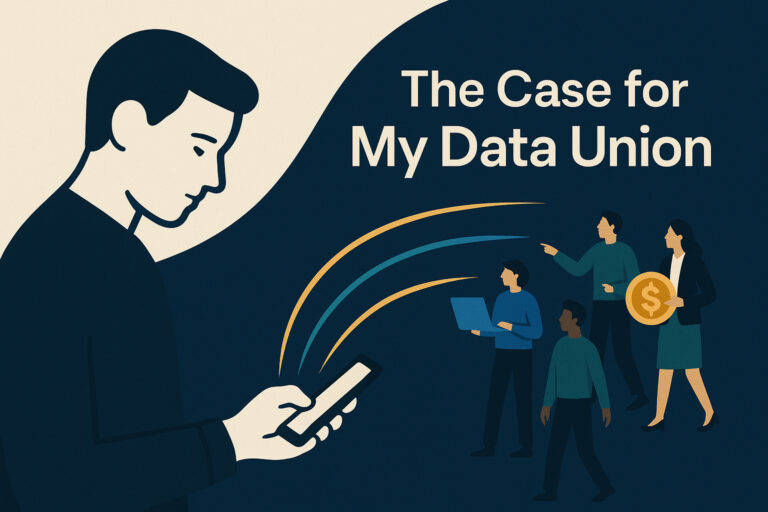
Every time you browse the web, use an app, or make a purchase, companies called data aggregators collect information about you through vague terms of service agreements, obscured device settings, and pesky notifications. Some of it is obvious, such as your email address, what you bought, and what you clicked on. Some of it is subtle, such as which devices are yours, what time you usually check your phone, and where you access the internet from.
This information gets collected and sold to data brokers, companies whose entire business is creating consumer profiles without their explicit consent. On the surface, much of this data appears anonymous. But anonymity is fiction in the hands of data brokers whose business models rely upon reidentifying you. According to Georgetown Law, 63% of Americans can be uniquely identified using just three data points: gender, date of birth, and zip code. When data brokers buy enough information from enough sources, they can piece together your identity puzzle and sell it to whomever they want, without your knowledge or consent.
Here’s where it gets murky. Some data brokers know their collection methods are ethically questionable or legally dubious. So, they launder like Marty Byrde, desperate to stay alive for another year while lining their pockets full of cash earned from your property.
The Laundering Process
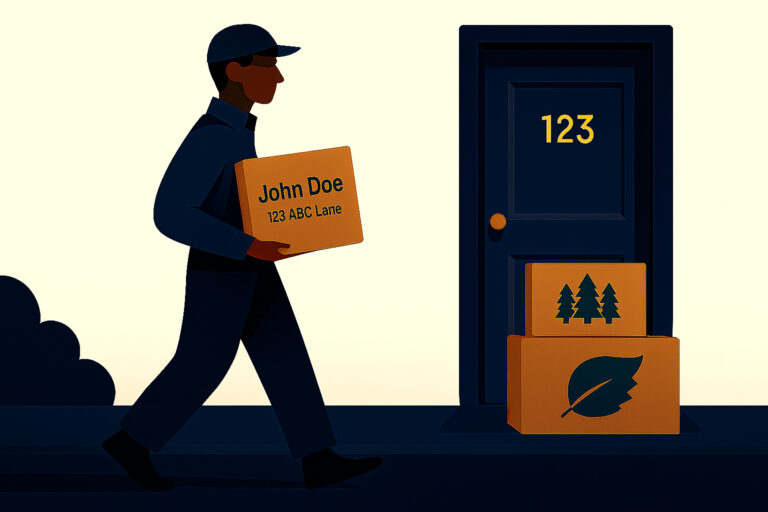
Just like the cartel moves drug money through layers of empty shell-companies before it reaches Marty’s casino, some data brokers move consumer information the same way to hide your data’s origin. Data collected from American consumers might be sold to an offshore company, transferred to another company, then routed back to a U.S. company with clean-looking paperwork. By the time it reaches its destination, the trail is cold. Your data, including your identity, is now their property and no one can prove otherwise.
The “casino” in this scheme is the broader data economy, which includes the advertising platforms, marketing systems, targeting algorithms, and AI-trainers that run on consumer data as fuel to their businesses. These platforms don’t launder the data themselves, but they profit enormously from its existence. Like Marty’s casino generating legitimate revenue that mixes with cartel cash, these platforms generate legitimate business value that gets entangled with data of questionable origin.
The casino workers? Those are the operators of massive cloud infrastructure companies that store and transfer data called data lakes. They host consumer data for brokers and facilitate transfers between buyers and sellers. The operators almost certainly suspect that some of the data flowing through their pipes wasn’t collected with meaningful consent. But scrutinizing sources would mean losing clients. It would mean less data hosted, fewer transfers processed, less revenue earned. Shareholders of these companies would get cranky if this happened and promptly replace operators who dare ask questions.
Based on my direct experience with these platforms, they go out of their way to bury their head in the sand to see and hear no evil. When I’ve reached out for transparency and submitted evidence suggesting unlawful activity from certain data brokers, the help desks offer nothing. “We’re just the hosts,” they say. The problem gets pushed elsewhere. Plausible deniability preserved.
Why It Matters
In Ozark, the cartel’s money laundering has victims. Communities are ravaged by drug trafficking and legitimate businesses are undercut by competitors with unlimited dirty cash. Data laundering has victims too: you.
Your behavioral patterns[1], your purchases[2], your location history[3], your political views[4], your family status[5], and religious affiliations[6] all get bought and sold without your meaningful consent. The profiles built about you influence everything you see online: the content you’re shown, the ads you see, the prices you’re offered, and the opportunities that reach you. It even affects your access to credit and loans. Companies profit from your information while you receive nothing. When something goes wrong, such as data breaches[7], discriminatory algorithms[8], manipulative and fraudulent ad campaigns[9],[10],[11], or incorrectly attributed data,[12] you bear the full consequences while those who profit hide behind legal complexity and willful ignorance. In other words, you own all the risk and get none of the rewards. Talk about a bad deal!
If you doubt the scale of what’s happening, consider reviewing the marketing materials from the largest data brokers. For example, this a marketing piece from one of the largest data brokers boasting about their reach and capabilities. Ask yourself these questions after glancing at it:
- > 2.5 billion connected consumers globally. Are you one of them? Did you agree to be?
- > 5 trillion records processed per month. Where do those records come from?
- > 10k unique attributes tracked. What do they know about you? Who told them?
- Recognizing unauthenticated visitors to drive personalization and relevance. How are they identifying you even if you haven’t logged in or explicitly provided your data?
- Data sold to advertisers, AI systems, and precision targeting partnerships. Who is buying your profile? Why? For how much?
And at the bottom of the page, in small text, you are reassured that they are “committed to ethical data use.” Do you believe that?
The current system works because consumers are fragmented. Individually, you have no leverage against trillion-dollar platforms and the shadowy data broker networks that undermine your choice, wealth, and privacy. You can’t trace where your data went. You can’t negotiate for fair compensation. You can’t force accountability. And unfortunately, you should not expect any meaningful help from the government to serve your best interests.[13],[14]
But what if consumers weren’t fragmented? They force the market to find a new equilibrium. One that benefits them, as it should have been all along.
Coming Next
In the next article, we’ll explore how organized consumers can break the data laundering machine. Not by opting out of the data economy, but by inserting their own representative into it. Like engaged investors who shine light on corporate fraud, or labor unions that negotiate fair terms for their members, a collective acting on behalf of consumers can remove plausible deniability, exile bad actors, and demand fair compensation for the data that fuels the entire system.
The data economy doesn’t have to work against you. But first, you need someone in your corner. Sign up below if you want to join My Data Union and other consumers who are ready for a change. Be the first to receive early access to the tools you need to control, monetize, and protect your data.
[1] https://www.businessnewsdaily.com/10151-how-to-influence-consumer-decisions.html
[2] https://usa.visa.com/solutions/visa-commercial-data-solutions.html
[3] https://www.ftc.gov/news-events/news/press-releases/2026/01/ftc-finalizes-order-settling-allegations-gm-onstar-collected-sold-geolocation-data-without-consumers
[4] https://www.reuters.com/technology/cybersecurity/ftc-settles-with-data-brokers-that-sold-political-pregnancy-info-2024-12-03/
[5] Ibid.
[6] Ibid.
[7] https://guardz.com/blog/top-recent-data-breaches/
[8] https://academic.oup.com/jla/article/15/1/1/7246686
[9] https://bjlti.com/revista/article/view/23/21
[10] https://www.justice.gov/archives/opa/pr/epsilon-senior-executive-and-sales-manager-both-sentenced-selling-data-millions-us-consumers
[11] https://www.lawfaremedia.org/article/data-brokers-elder-fraud-and-justice-department-investigations
[12] https://www.consumerfinance.gov/about-us/blog/holding-credit-reporting-companies-accountable-for-junk-data/
[13] https://www.consumerfinance.gov/about-us/newsroom/cfpb-proposes-rule-to-stop-data-brokers-from-selling-sensitive-personal-data-to-scammers-stalkers-and-spies/
[14] https://www.consumerfinancialserviceslawmonitor.com/2025/05/cfpb-withdraws-proposed-fcra-data-broker-rule/