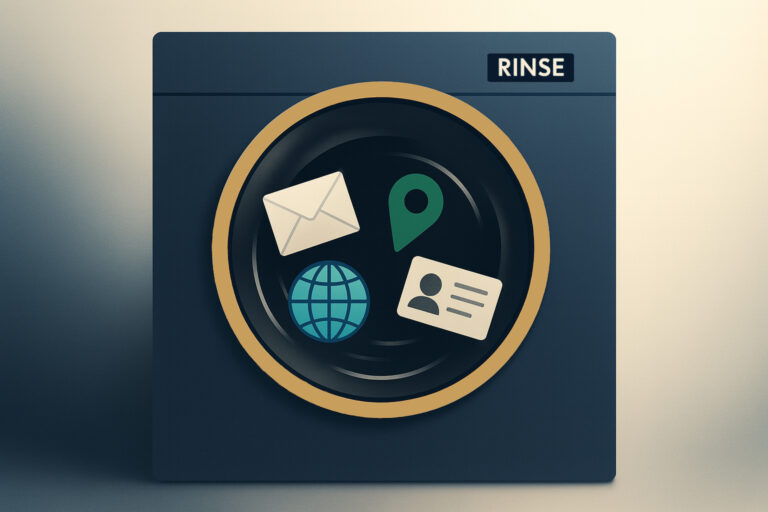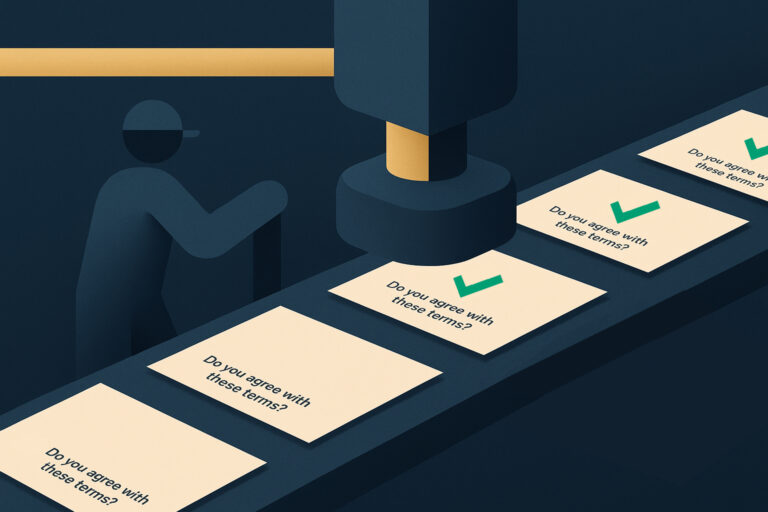
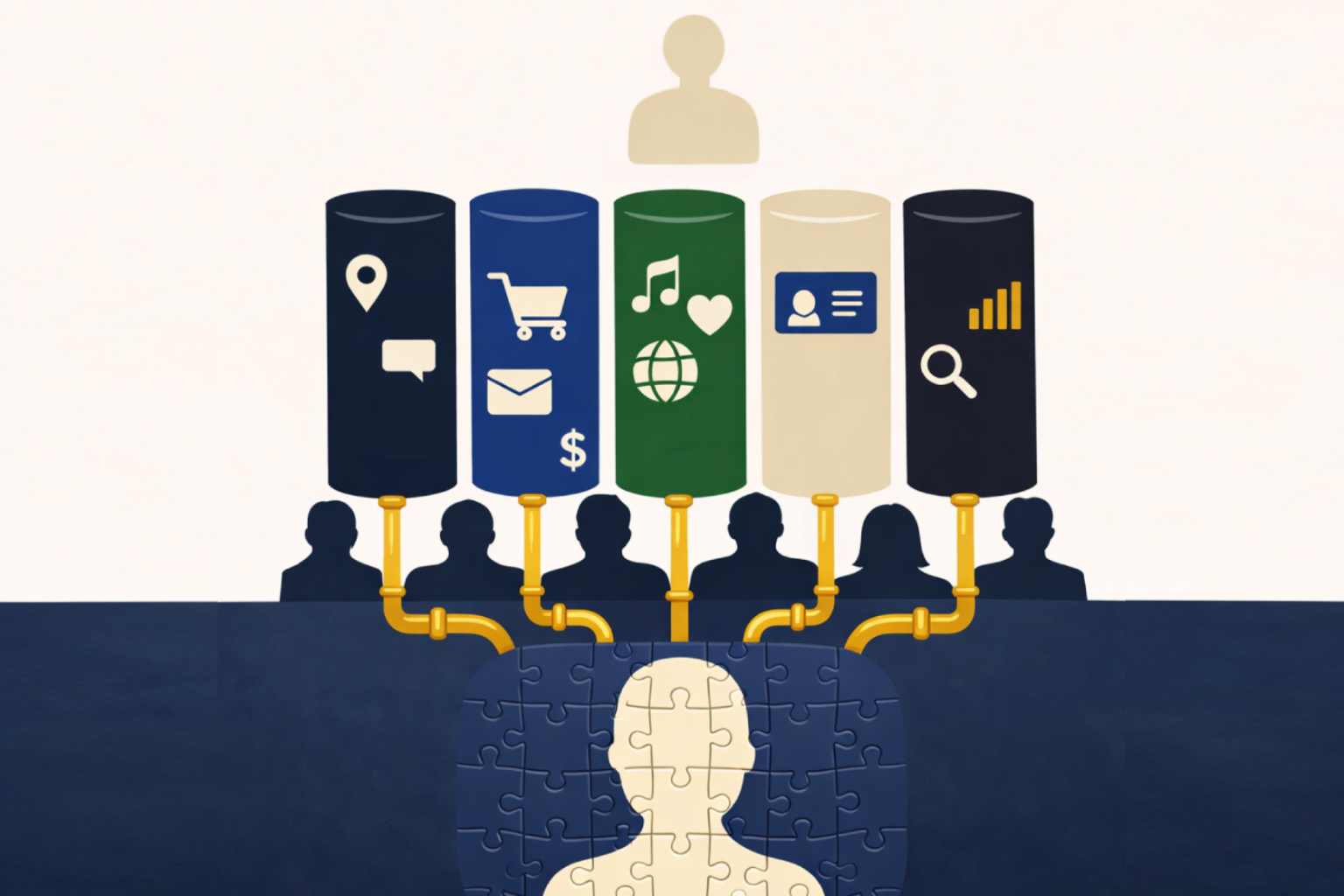
In a previous article, I explained how your data often gets laundered like drug money. Your data is quietly taken from hundreds of sources, combined, and sold to data buyers without your explicit consent. Let’s take a closer look at the central figures to the laundering, the data brokers, and how consumers can take back their profits by pushing data brokers out of the equation.
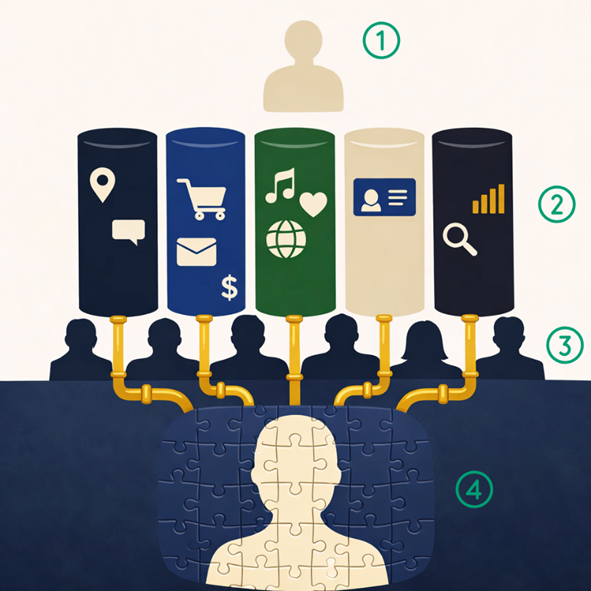
The image above tells the story of how data brokers acquire and combine your data. At step 1, is you, the consumer. You interact with dozens of services every day that create information about how you use each service. The information includes things like:
- your location;
- the stuff you purchase;
- how you paid for things;
- what you search for;
- when you use a service or app; and
- your influence.
The companies providing you the service in step #2 are called data aggregators, and they store your data in the silos. Each silo reveals something unique about you.
Do you notice the shadowy figures operating below the silos in step #3? These are the data brokers, and they pay the data aggregators so they can siphon your data away from the silos. You never agreed to this arrangement, you aren’t paid for it, and you are given no transparency into what happens once your property leaves the silo. It’s like a friend pawning a watch you lent them!
At the bottom, all those fragments flow together to form a reconstructed picture of you in step 4. The industry calls this “reidentification,” and it happens when data brokers combine thousands of your identity puzzle pieces that are collected from hundreds of different sources. Think of it like your digital clone, but someone else claims ownership over it.
Here’s the troubling part: once your data leaves those silos, with or without your consent, your control over your property is gone forever. It now belongs to the data brokers who sell and license your property to many other companies without your consent. Your data continues to spread, replicate, and change ownership long after you stop using a particular service. It is an unknown, open-ended cost you are forced to pay in perpetuity that increases your risk of being a future victim of theft and fraud. Could you imagine being charged $50 every year for a cheeseburger you ate five years ago? And even that’s less absurd than reality; at least you would see the bill to know what it is worth!
So, who are the data brokers?
Data brokers are companies that exist solely to buy your behavioral and demographic data. They use your email address, phone number, or device ID to stitch your identity back together from the pieces they collected from the silos. Once they profile you, they sell the profile for immense profits. That’s it, they serve no other purpose. By design you’ve probably never heard of them by name, and you certainly never agreed to do business with them, but they know everything about you! These companies don’t advertise what they really do in plain English. But if you know what to look for, the signs are obvious.
1. Contradictory product and policy
A company’s privacy policy may claim they don’t engage in buying or selling your data, but the sales pitch for their product suite tells a different story. In cases of such contradictions, believe the sales pitch, that’s where the money comes from.
By claiming they’re not data brokers, these companies avoid the scrutiny that comes with the label. They skip registration requirements in states like California and Texas. They dodge audits and data deletion requests. They evade the transparency rules designed to protect you.
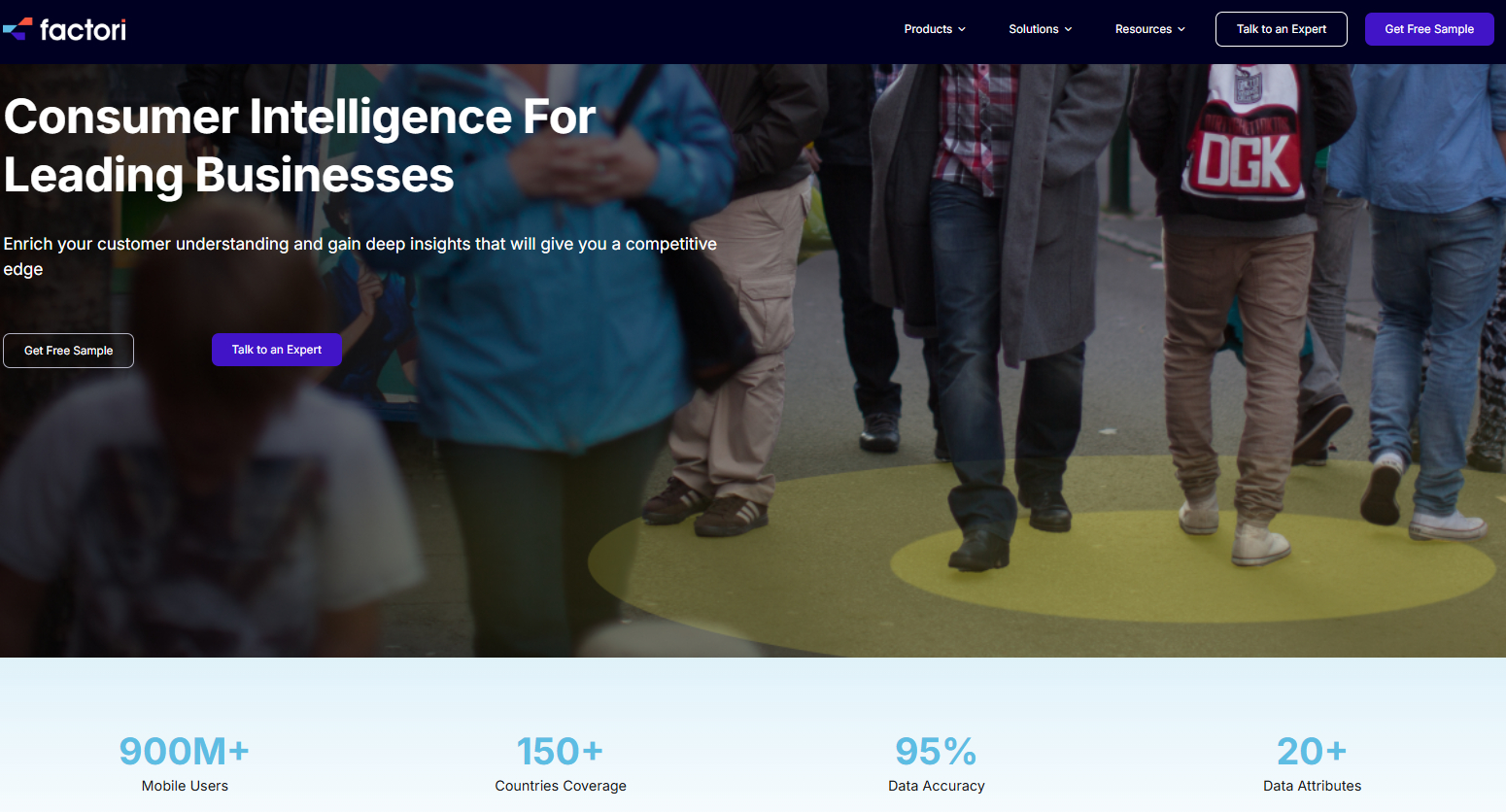
I consider companies that reach millions of mobile users many times a day, track people across different platforms and devices, or perform sophisticated location analysis with people’s data as data brokers. The legal word games do not change who they are nor what they’re designed to do, much like calling your dog “Giraffe” does not suddenly transform your dog into a giraffe.

“Meet my pet, Giraffe.” – a data broker, probably
2. Deliberately complicated corporate structure
Headquarters in one country. Data analysis in another. Legal entity in a third. Server infrastructure somewhere else entirely. If there’s one thing I learned as an investment analyst, it is that companies are usually up to something naughty when things are more complicated than necessary. Sometimes it is to avoid regulations in a jurisdiction, and other times to deceive their investors or customers.
If you can’t quickly and easily figure out where a company operates, or if their local presence seems inadequate, that’s not an accident. That’s the design. Odds are that they are performing their services offshore to evade laws, oversight, and transparency.
3. Deceptive marketing jargon
“Privacy-first” data brokers are like “health-conscious” cigarette companies. The words sound nice but are comically hypocritical.
Keep your ears tuned for these phrases:
Data clean room: Sounds sterile and safe, right? It’s actually a facility where different parties bring their consumer data into a controlled environment, mix them together, and walk out with usable and laundered data. And they do it while publicly claiming nothing was technically “shared.” The infrastructure is misused to enable data transactions while preserving plausible deniability.
Identity resolution or identity graph: This means connecting your siloed data back to a single profile. It’s the technical term for solving the identity puzzle at step #4 in the first image. When a company offers this, they’re really saying “we can figure out who you are.”
Audience activation. This is the monetization step. It means taking your reconstructed identity puzzle and pushing it out to ad networks for targeting. Companies offering this are in the business of turning your identity into ad dollars.
These terms exist because “we deeply probe people for information without their consent” doesn’t test well in focus groups. These words sound more legitimate and sophisticated. But when you hear or read this jargon, know you’ve found a data broker.
Squeeze out data brokers and profit for yourself
Look at the image again. Right now, shadowy figures control the pipes between your data and your identity. They profit while you get nothing, and once they have your data, you can never get it back.
The only entity that should be able to form that complete picture is you. You already have all the pieces, whereas most data brokers must buy them from data aggregators, combine them imperfectly, and distribute them irresponsibly. You can do it safely, profitably, and efficiently if you have the right tools and representation in the marketplace. Once consumers realize this fact and signal that they are ready to take the wheel, data buyers, who only care about acquiring large swaths of authentic data to fuel their businesses, will quickly shift their business directly to consumers. Not because of morals, but because of the competitive pressure to find the best data available on the market.
Organized consumers with access to the right tools and representation can push data brokers out of the market and capture that value for themselves. My Data Union is leading the charge to make it possible. Our tools will allow you to collect your own data, understand what it’s worth, and decide for yourself whether to sell it or keep it private. Either way, My Data Union will help you do it effectively.
The data economy won’t change itself. Sign up below and be the first to receive early access to the tools you need to control, monetize, and protect your data.